How do I install a tamper-resistant outlet? - Turn off the power to the outlet at the main service panel.
- Make sure there's no power to the outlet.
- Unscrew the screws holding the outlet in place.
- Pull the old outlet out of the box.
- Disconnect the wires.
- Set the old outlet aside.
- Connect the new wires to the new outlet:
.
In respect to this, how do I know if my outlets are tamper resistant?
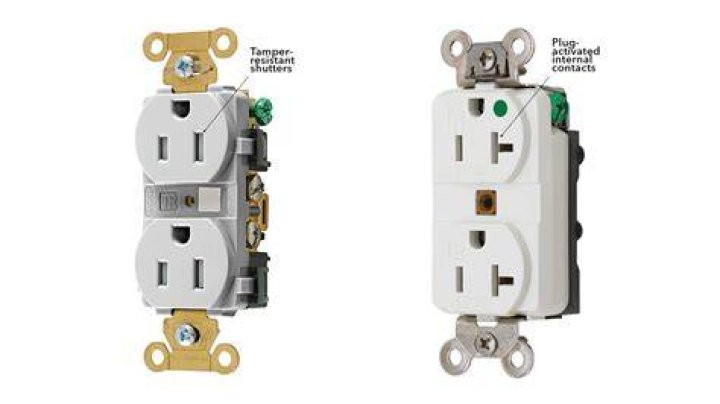
- The letters “TR” are embossed between the two vertical slots (hot and neutral).
- Tamper resistant receptacles use a plastic shutter just inside the two vertical slots, and it will not release unless equal pressure is applied to both of them at the same time by the two prongs of an electrical cord.
what is the difference between a tamper proof outlet and a regular outlet? TRRs resemble regular receptacles but they're so much more. TRRs feature built in safety shutters that block foreign objects from being inserted into the receptacle. TRRs required by the National Electrical Code since 2008. Internal shutters block foreign objects from being inserted into the outlet.
In this manner, why can't I plug anything into my outlet?
As for the "closed" receptacles, those are most likely tamper resistant receptacles. The guards should move out if the way when you plug things in. The guards only move when they are both pushed simultaneously, so make sure you're inserting the plug straight. Wiggle the plug, and try a bit more force.
Can you get electrocuted by pulling out a plug?
It should be completely okay to touch the outside of a plug to either insert it into or remove it from a wall outlet or power strip. However, if you touch the “line” plug / outlet prong and you become part of an electrical circuit, you will get shocked.
Related Question Answers
Why is there plastic in my outlet?
Outlet plastic behind plugs. That is the next generation of receptacles called tamper resistant. It keeps the kids from sticking something into the prongs. You need to push the plug in 100% straight so that both slots open at the same time.Are tamper proof outlets required?
For example, any 15- or 20-ampere receptacle that is part of a luminaire or appliance—those receptacles totally controlled by a wall switch in any habitable room, those located within cabinets or cupboards, or any receptacles located more than 5½ feet above the floor—is required to be tamper-resistant.Are tamper proof outlets baby proof?
Tamper-resistant outlets reduce the risk of electrical injuries, but they are not completely tamper-proof. Unfortunately, some people believe that tamper-resistant outlets are “child proof” when they are not. Tamper-resistant outlets do not prevent children from imitating adults and inserting plugs into outlets.What does tamper resistant mean?
Tamper resistance is resistance to tampering (intentional malfunction or sabotage) by either the normal users of a product, package, or system or others with physical access to it. Anti-tamper devices have one or more components: tamper resistance, tamper detection, tamper response, and tamper evidence.How do you get plastic off of an outlet?
You could try dipping a toothpick in superglue, push it into the socket until it touches the plastic, letting it adhere, then pulling both the toothpick and plastic out of the socket.Are GFCI outlets tamper resistant?
A. Yes. According to 406.12, all non-locking type 15A and 20A, 125V receptacles in the following areas of a dwelling unit [210.52] must be listed as tamper-resistant: Wall space — 210.52(A)What does TR mean on electrical outlet?
tamper resistant
How do you plug in a child proof outlet?
In order to insert a plug into the receptacle, simply apply equal pressure to both sides simultaneously (as you would normally do) which allows the receptacle's cover plate to open. Never seen a child proof outlet? Visit the Electrical Safety Foundation International's website for a virtual demonstration.How do child proof outlets work?
Child proof outlets have TR or TRR(Tamper Resistant Receptacle) on them and Hubbell's new see through outlet lets you see the various mechanisms at work. The simple explanation is the plastic piece blocking the openings for the plug to enter will not move unless BOTH openings are being pushed in at the SAME time.Are outlet plugs safe?
No, American power outlets are inherently dangerous, not only to young children, but even for adults. Outlet covers and tamper-resistant outlets are only effective when there is nothing plugged in.What is a GFCI outlet?
A ground fault circuit interrupter (GFCI), or Residual Current Device (RCD) is a type of circuit breaker which shuts off electric power when it senses an imbalance between the outgoing and incoming current. A circuit breaker protects the house wires and receptacles from overheating and possible fire.How do electrical outlets work?
An outlet has three holes. When you plug in a lamp and turn it on, the hot part of the outlet allows electricity to flow into the lamp, turning on the light bulb. The circuit is completed when the current is brought back into the outlet through the neutral slot, and back into the circuit breaker.Why my socket is not working?
Unscrew the suspect fuse and replace it with one of the same type and amperage. In most cases, a tripped circuit breaker is caused by a temporary overload on the circuit or a short circuit in some device plugged into the circuit. But in rare cases, a loose wire in an electrical box could be causing the problem.How do you get a plug pin out of a socket?
Turn off the circuit breaker to the outlet. Test it with a circuit tester to make sure the power is off. Inspect the broken prong to see how deeply it is embedded in the plug. If it is sticking out enough, grab it with a pair of needle nose pliers and pull it straight out.How do I change a plug socket?
Step 1. First, you'll need to isolate the circuit. Use a socket tester to double-check that it's dead, then unscrew the faceplate and disconnect the cables from the terminals of the single socket mounting box. Run green/yellow sleeving over the earth core if you find it's exposed.What does tamper resistant mean outlet?
Tamper-resistant outlets are designed to prevent kids from hurting themselves while fidgeting with an outlet. They have two spring-loaded shutters that close the slots when you remove a plug. It's important to note the shutters only open when both springs are compressed at the same time.Do outlets need covers?
All wall outlets should have plastic covers to prevent debris from interfering with the sockets. Covering your outlets will also prevent pets and small children from accidentally shocking themselves. Even if an outlet isn't working, you should still make sure it's covered.Are outlet covers a choking hazard?
Plastic outlet covers have been a popular childproofing device for many years. But these covers must be removed each time you need to plug something in and can be lost or forgotten about, which leaves the outlet exposed. These small pieces can also pose a choking hazard.At what age can you remove outlet covers?
Virtually all the adults, college students ranging in age from 19 to 25 years of age, were able to remove all styles of outlet cover in one to four seconds. 
 Daniel Santos