Is nuclear energy cleaner than coal?
 Sarah Rodriguez
 .
Consequently, is nuclear energy cleaner than fossil fuels?
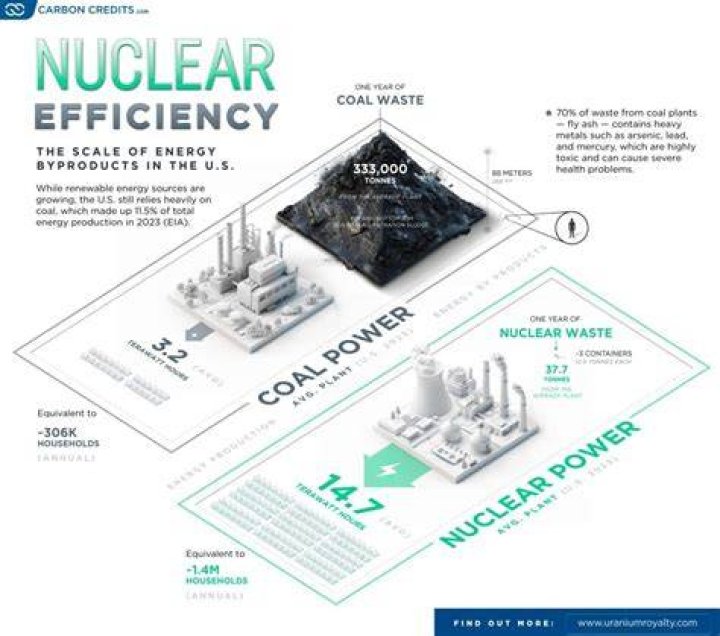
Nuclear energy is cleaner while generating electricity. Nuclear fission provides energy without releasing greenhouse gases such as carbon dioxide. In a nuclear power vs coal power comparison, however, consider that combustion of fossil fuels releases carbon dioxide into the atmosphere.
Furthermore, which is better nuclear power or coal? The main benefits of nuclear power are that is it more efficient than burning fossil fuels as the amount of energy released from uranium per gram is much more than that of fuels such as oil or coal; approximately 8,000 times more efficient in fact.
Also, is nuclear energy safer than coal?
Nuclear energy is by far the safest energy source in this comparison – it results in more than 442 times fewer deaths than the 'dirtiest' forms of coal; 330 times fewer than coal; 250 times less than oil; and 38 times fewer than gas. Fossil fuels have therefore killed many more people than nuclear energy.
Is coal nuclear energy?
Nuclear energy is mostly carbon-free and avoids the emissions associated with fossil fuels that pollute the air and water. The power from one kilogram of uranium is approximately equivalent to 42 gallons of oil, 1 ton of coal, or 17,000 cubic feet of natural gas.
Related Question Answers
What is a disadvantage of nuclear energy?
Disadvantages of Nuclear PowerThe hindrance in the growth of nuclear energy is due to many complex reasons, and a major component is the nuclear waste. 1 tonne of fresh fuel rod waste from a nuclear reactor would give you a fatal dose of radiation in 10 seconds if placed 3 meters away.Is nuclear energy eco friendly?
As of today, nuclear energy is considered as one of the most environmentally friendly source of energy as it produces fewer greenhouse gas emissions during the production of electricity as compared to traditional sources like coal power plants.Why is nuclear fusion not used?
The fusion processUnlike fission, nuclei do not spontaneously undergo fusion: atomic nuclei are positively charged and must overcome their huge electrostatic repulsion before they can get close enough together that the strong nuclear force, which binds nuclei together, can kick in.What are the pros and cons of nuclear power?
Below you will find the pros that led to the revival of nuclear energy.- Low Greenhouse Gas Emissions.
- High Power Output.
- Inexpensive Electricity.
- Nuclear Energy Doesn't Rely on Fossil Fuels.
- Economic Impact.
- Back-end Environmental Impact.
- Past History of Nuclear Accidents.
- High Up-Front and End Stage Cost.
Why we should not use nuclear energy?
Barriers to and risks associated with an increasing use of nuclear energy include operational risks and the associated safety concerns, uranium mining risks, financial and regulatory risks, unresolved waste management issues, nuclear weapons proliferation concerns, and adverse public opinion.Why is nuclear energy bad for the environment?
Nuclear energy produces radioactive wasteA major environmental concern related to nuclear power is the creation of radioactive wastes such as uranium mill tailings, spent (used) reactor fuel, and other radioactive wastes. These materials can remain radioactive and dangerous to human health for thousands of years.Why using electricity is bad for the environment?
All forms of electricity generation have an environmental impact on our air, water and land, but it varies. Producing and using electricity more efficiently reduces both the amount of fuel needed to generate electricity and the amount of greenhouse gases and other air pollution emitted as a result.What is the most efficient energy source?
Most Efficient Energy SourcesAlthough there are many types of energy, the most efficient forms are renewable: hydro-thermal, tidal, wind, and solar. Solar energy has been proven to be the most efficient and effective among renewable energy sources for home and commercial use.How many people have died from nuclear power?
They similarly estimated that the use of nuclear power over that time caused 5,000 or so deaths, such as cancer deaths from radiation fallout and worker accidents. Comparing those two estimates, Kharecha and Hansen came up with the 1.8 million figure.How many people have died in nuclear power accidents?
Deaths from Chernobyl31 people died as a direct result of the Chernobyl accident; two died from blast effects and a further 29 firemen died as a result of acute radiation exposure (where acute refers to infrequent exposure over a short period of time) in the days which followed.What is the safest form of energy?
Nuclear Safest Source of Energy. Nuclear is the safest source of energy, producing only one-quarter the number of deaths per terrawatt hour as wind, which is the second safest. Coal is by far the most dangerous, producing deaths both in the mining and transportation and in its emissions of air pollution.How many deaths are caused by fossil fuels?
According to the World Health Organization in 2012, urban outdoor air pollution, from the burning of fossil fuels and biomass is estimated to cause 3 million deaths worldwide per year and indoor air pollution from biomass and fossil fuel burning is estimated to cause approximately 4.3 million premature deaths.Is nuclear power safe for humans?
Truth: Nuclear energy is as safe or safer than any other form of energy available. No member of the public has ever been injured or killed in the entire 50-year history of commercial nuclear power in the U.S. In fact, recent studies have shown that it is safer to work in a nuclear power plant than an office.How many nuclear plants are there in the world?
Currently, there are 450 nuclear reactors in operation in some 30 countries around the world. One of the largest plants is situated in France, where about 70 percent of total electricity generation was derived from nuclear sources in 2018.How many died at Fukushima?
The Fukushima meltdown was the world's worst nuclear accident since Chernobyl in 1986. Around 18,500 people died or disappeared in the quake and tsunami, and more than 160,000 were forced from their homes.What countries have nuclear power plants?
The 17 Countries Generating The Most Nuclear Power- United States of America. Workers build the pit that will house a new nuclear reactor at the Plant Vogtle nuclear power plant in Augusta, Ga.
- France.
- Russia.
- South Korea.
- Germany.
- China.
- Canada.
- Ukraine.
What are the advantages and disadvantages of atomic energy?
Advantages and disadvantages of nuclear power stations
| Advantages | Disadvantages |
|---|---|
| Produces no polluting gases. | Waste is radioactive and safe disposal is very difficult and expensive. |
| Does not contribute to global warming. | Local thermal pollution from wastewater affects marine life. |
How long would nuclear power last?
200 years