What are the positive effects of a tsunami?
 Daniel Santos
.
People also ask, what are the positive and negative effects of tsunamis?
Negative: Tsunami and Flooding Earthquakes can also cause tsunamis, which in turn cause massive flooding in coastal areas. When a strong earthquake occurs underwater, it changes the level of the seabed and causes the water level to either rise or fall.
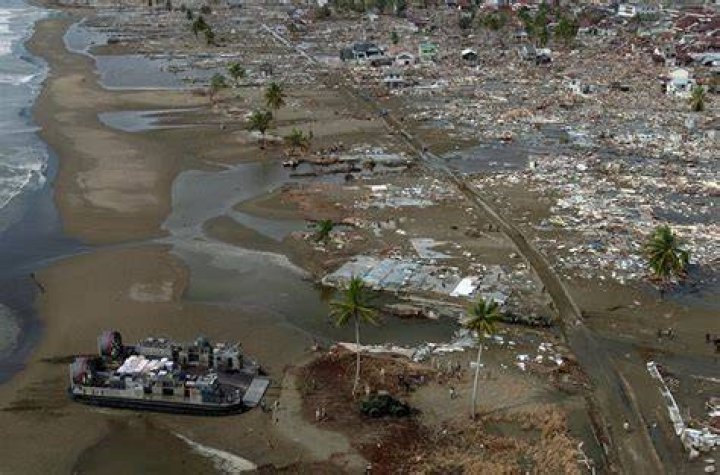
Also Know, are tsunamis good or bad? A tsunami is one of nature's most dangerous natural hazards, having killed and injured thousands of people in the last decade alone and causing destruction in many coastal areas around the world. Tsunamis have no “season,” and a tsunami can strike at any time of day or night, in good weather or bad.
Also asked, what are positive effects of earthquakes?
A: Earthquakes are very useful to humans because they provide a picture of what's going on underground. This can make oil and gas extraction more efficient, and allows scientists to monitor the progress of water during geothermal energy extraction.
How strong is a tsunami?
About 80% of tsunamis happen within the Pacific Ocean's “Ring of Fire.” The first wave of a tsunami is usually not the strongest, successive waves get bigger and stronger. Tsunamis can travel at speeds of about 500 miles or 805 kilometers an hour, almost as fast as a jet plane.
Related Question Answers
How long do tsunamis last?
approximately five minutes to two hours
How do tsunamis work?
Tsunamis, which can travel over the ocean surface from many hundreds of miles, can be generated when chunks of the planet's crust separate under the seafloor, causing an earthquake. Here's what happens: One slab of lifting crust essentially rapidly acts as a giant paddle, transferring its energy to the water.How can we prevent tsunami?
- Avoid building or living in buildings within several hundred feet of the coastline.
- If you do live in a coastal area, elevate your home to help reduce damage.
- Take precautions to prevent flooding.
- Have an engineer check your home and advise about ways to make it more resistant to tsunami water.
Where do tsunamis occur?
Tsunamis occur most often in the Pacific Ocean and Indonesia because the Pacific Rim bordering the Ocean has a large number of active submarine earthquake zones. However, tsunamis have also occurred recently in the Mediterranean Sea region and are expected in the Caribbean Sea as well.How do you survive a tsunami?
IF YOU ARE UNDER A TSUNAMI WARNING:- First, protect yourself from an Earthquake.
- Get to high ground as far inland as possible.
- Be alert to signs of a tsunami, such as a sudden rise or draining of ocean waters.
- Listen to emergency information and alerts.
- Evacuate: DO NOT wait!
- If you are in a boat, go out to sea.
What is Tsunami short answer?
A tsunami is a natural disaster which is a series of fast-moving waves in the ocean caused by powerful earthquakes, volcanic eruptions, landslides, or simply an asteroid or a meteor crash inside the ocean. A tsunami has a very long wavelength. The waves travel at a great speed across an ocean with little energy loss.Is there a warning system for tsunamis?
There are two distinct types of tsunami warning systems: international and regional. When operating, seismic alerts are used to instigate the watches and warnings; then, data from observed sea level height (either shore-based tide gauges or DART buoys) are used to verify the existence of a tsunami.Are Little Earthquakes good?
Small earthquakes are helpful because they release pressure and prevent larger ones. If enough stress has built up on a fault to generate a magnitude-7.0 earthquake, say, it would thus take about 1000 earthquakes with a magnitude of 5.0 to release the equivalent energy. The Earth doesn't work that way.Are earthquakes important?
No, there are no months that have more earthquakes than others. It is internal geological forces that play the most important role in generating earthquakes. Most large earthquakes are as a result of immense continental plates, called tectonic plates, that move, one with respect to another.How does an earthquake impact the environment?
Earthquake environmental effects. Earthquake environmental effects are the effects caused by an earthquake, including surface faulting, tsunamis, soil liquefactions, ground resonance, landslides and ground failure, either directly linked to the earthquake source or provoked by the ground shaking.How do Japanese predict earthquakes?
When a P-wave is detected from two (or more) of the 4,235 seismometers installed throughout Japan, the JMA analyzes and predicts the approximate location of the earthquake's epicenter. This allows the JMA to notify people in affected prefectures by TV and radio if a strong earthquake is expected.Why is it important to measure earthquakes?
Purposes of Earthquake InstrumentationVulnerability of structures – prevent collapse and minimise structural damage (the task of an earthquake engineer). Risk – alerts, warnings and alarms for preparation and emergency response (the tasks of management and operating staff).How can you be prepared for an earthquake?
Prepare your home for an earthquake- Keep closed-toed shoes with rubber soles under your bed.
- Move heavy objects to lower shelves.
- Remove or secure artwork hanging over beds or seating.
- Secure heavy appliances and shelving.
- Practice shutting off the gas, water, and power.
How big do tsunamis get?
Most tsunamis cause the sea to rise no more than 10 feet (3 meters). The Indian Ocean tsunami caused waves as high as 30 feet (9 meters) in some places, according to news reports. In other places witnesses described a rapid surging of the ocean. Flooding can extend inland by a thousand feet (300 meters) or more.Which ocean is more prone to tsunamis?
Pacific Ocean