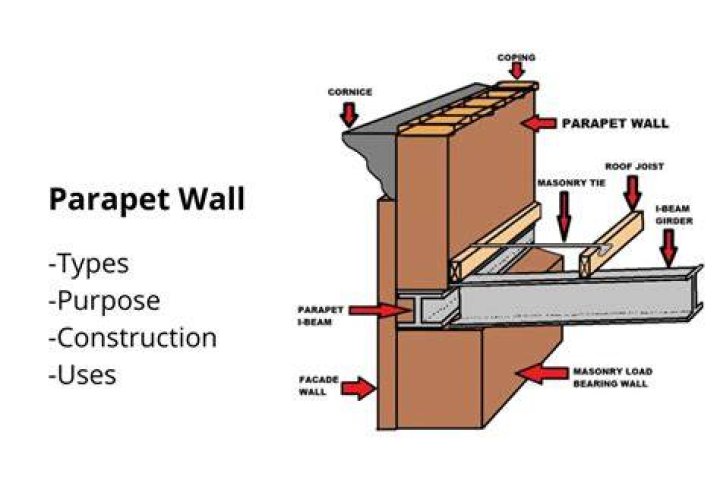
What is a parapet in a trench?
 Sarah Rodriguez
 .
Furthermore, what is a parados in a trench?
Parados. The rear-side of the trench was known as the parados. Both the parados and the parapet (the side of the trench facing the enemy) were protected by two or three feet of sandbags. The parados also protected soldiers in front-line trenches against those firing from the rear.
Secondly, what was the front line trench used for in ww1? Behind the front-line trenches were support and reserve trenches. The three rows of trenches covered between 200 and 500 yards of ground. Communication trenches, were dug at an angle to the frontline trench and was used to transport men, equipment and food supplies.
In respect to this, how does trench warfare work?
Trench warfare 'works'* by offering soldiers a contiguous shelter from the storm of rifle, machine gun and artillery fires. Each trench started out as individual or paired soldier fighting pits. Troops dig at night until the basic trench line gets dug, and then can continue digging during the day.
What were trenches made of?
The typical trench was dug around twelve feet deep into the ground. There was often an embankment at the top of the trench and a barbed wire fence. Some trenches were reinforced with wood beams or sandbags. The bottom of the trench was usually covered with wooden boards called duckboards.
Related Question Answers
What is a Firestep?
Noun. fire step (plural fire steps) (military, chiefly historical) A step or platform dug into the front side of a military trench so that soldiers could stand on it and fire over the parapet.What is the purpose of parados?
A parados is part of a Greek tragedy in which the chorus enters for the first time and sings its first song. The chorus is a group of people who sing in unison songs that provide commentary and sometimes background information about the play. The chorus uses the parados to provide important information.What does parodos mean in Greek?
A Parodos (also parode and parodus; Ancient Greek: πάροδος, "entrance," plural parodoi), in the theater of ancient Greece, is a side-entrance to the stage, or the first song that is sung by the chorus at the beginning of a Greek tragedy.What were communication trenches used for?
The trench system on the Western Front consisted of front-line, support and reserve trenches. The three rows of trenches covered between 200 and 500 yards of ground. Communication trenches were dug at an angle to those facing the enemy. These trenches used to transport men, equipment and food supplies.What does parados mean in Greek Theatre?
Term. Parados (dramatic structure) Definition. entrance affording access either to the stage (for actors) or to the orchestra (for the chorus) of the ancient Greek theater.What were sandbags used for in ww1?
Sandbags were invariably used to provide troops with protection at both the front and rear of trenches (the parapet and parados) and were generally stacked some two or three feet deep.What was the ammunition shelf used for in ww1?
A shelf located in the trenches near soldiers. These shelfs were used to store and stock up on ammo. Was fencing wire with sharp points and edges used to delay or disrupt the enemy from advancing and attacking.What were elbow rests in ww1?
elbow rest: to assist in firing over the front of the trench. parapet: the raised section at the front of a trench, strengthened with sandbags, to protect the soldiers from enemy fire and to provide protect when firing at the enemy.Do any ww1 trenches still exist?
Trench RemainsThe chalky horizontal line on the ploughed field is evidence of a former trench line. Nevertheless, there are still remains of trenches to be found in remote parts of the battlefields such as the woods of the Argonne, Verdun and the mountains of the Vosges.Is trench warfare still used today?
So yes, trenches still have a use, but really only in infantry-heavy fighting, in areas where tanks can't effectively operate.What happened to the dead bodies in the trenches ww1?
The dead was usually buried right where they fell, and as soon as possible. Burying them was more important than the war itself because piles of rotting bodies would've caused plagues and decimated both sides. For this reason the opponents sometimes declared a ceasefire only to bury the dead.Why was it so difficult to attack a trench?
Because soldiers could not get close to them. Defense is easier than offence. Artillery had No Man's Land blanketed, machine guns covered the rest. Attack plans often involved a “rolling barrage” - the offensive artillery would fire to lead the attackers, causing the trench defenders to “dig in” or retreat.Why is the barbed wire in no man's land at an angle?
When fastened to the pickets, the wire was pulled out to make what was known as a apron. Barbed-wire was usually placed far enough from the trenches to prevent the enemy from the trenches to prevent the enemy from approaching close enough to lob grenades in.What started World War 1?
The immediate cause of World War I that made the aforementioned items come into play (alliances, imperialism, militarism, nationalism) was the assassination of Archduke Franz Ferdinand of Austria-Hungary. In June 1914, a Serbian-nationalist terrorist group called the Black Hand sent groups to assassinate the Archduke.How are trenches formed?
Trenches are formed by subduction, a geophysical process in which two or more of Earth's tectonic plates converge and the older, denser plate is pushed beneath the lighter plate and deep into the mantle, causing the seafloor and outermost crust (the lithosphere) to bend and form a steep, V-shaped depression.Where is No Man's Land?
Between the lines territory was left that was defined as no man's land. Such areas existed in Jerusalem, in the area between the western and southern parts of the Walls of Jerusalem and Musrara.What are soldiers on the front line called?
A front line (alternative forms: front-line or frontline) in military terminology is the position(s) closest to the area of conflict of an armed force's personnel and equipment, usually referring to land forces.What were the 4 types of trenches in ww1?
WW1 Trenches: The Heart of Battle- Artillery Line. The artillery line was where the big field guns were located.
- Communication Trench. The communication trenches were used to move between the front and rear trenches.
- Support Trenches.
- Bunker.
- Traverse.
- Machine Gun Nest.
- Front Line Trench.
- Barbed Wire.