What is the definition of sanitization?
 James Bradley
.
Similarly, it is asked, what is sanitization mean?
Sanitizing is defined as cleaning something to make it free of bacteria or disease causing elements. An example of sanitizing is wiping a counter with a bleach solution. YourDictionary definition and usage example.
Additionally, what is the difference between disinfecting and sanitizing? Sanitizing is meant to reduce, not kill, the occurrence and growth of bacteria, viruses and fungi. Disinfecting a surface will “kill” the microscopic organisms as claimed on the label of a particular product. The minimum level of effectiveness in a modern-day disinfectant is 100 percent kill of 6 log10 of an organism.
Keeping this in consideration, what are the sanitizing methods?
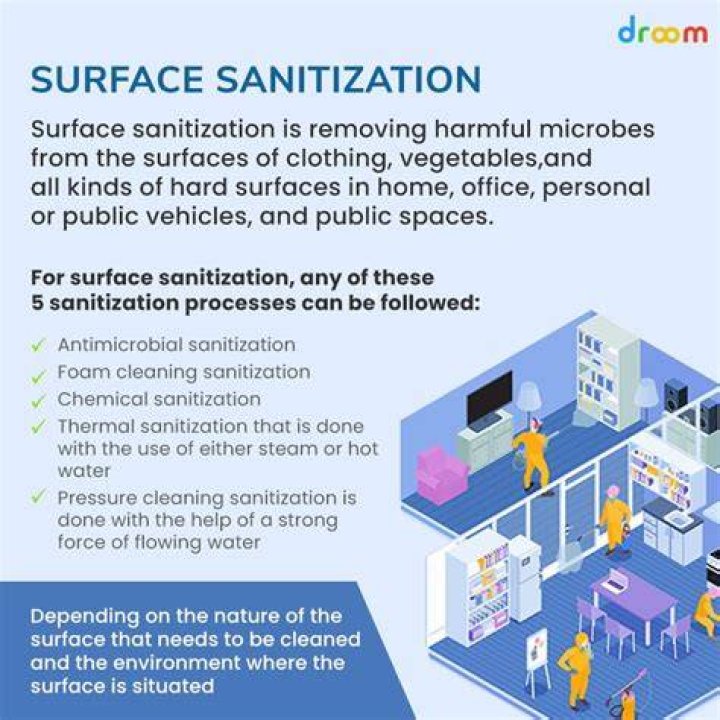
There are three methods of using heat to sanitize surfaces – steam, hot water, and hot air. Hot water is the most common method used in restaurants. If hot water is used in the third compartment of a three-compartment sink, it must be at least 171oF (77oC).
What are the 2 types of sanitizing?
There are three acceptable types of sanitizer solutions for use in a food establishment.
- Chlorine (Bleach)* Concentration: 50 to 100 ppm. Chlorine based sanitizers are the most commonly used sanitizers.
- Quaternary Ammonia (QUAT, QAC) Concentration: Per manufacturer's instruction.
- Iodine. Concentration: 12.5 to 25 ppm.
Related Question Answers
What is the mean of stack?
Stack. In computing, a stack is a data structure used to store a collection of objects. Individual items can be added and stored in a stack using a push operation. A stack in which items are removed the top is considered a "LIFO" (Last In, First Out) stack.What is difference between sanitizing and cleaning?
The Difference Between Clean And Sanitary“Clean”, means that soil and food are visibly removed from surfaces. When items are “sanitized” it means that those surfaces have a reduction of pathogens. There still may be microorganisms present, but they are at safe levels.What is the importance of sanitizing?
Sanitizing is designed to reduce the number of microorganisms to a safe level. Sanitizing is performed after cleaning. Unclean surfaces will reduce the effectiveness of sanitizing. All surfaces that come into contact with food must be cleaned and sanitized regularly.What is sanitizing data?
Data sanitization is the process of deliberately, permanently, and irreversibly removing or destroying the data stored on a memory device. A device that has been sanitized has no usable residual data and even advanced forensic tools should not ever be able recover erased data.How do you spell sanitization?
For the verb meaning to make sanitary, sanitize is the usual spelling in the U.S. and Canada, and sanitise is preferred everywhere else.What are the 4 categories of cleaning materials?
There are four main types of cleaning agents used in commercial kitchens: Detergents. Degreasers. Abrasives.
Effective cleaning and sanitizing also helps to:
- prevent pests from entering your business.
- prevent cross-contamination.
- prevent allergic reactions caused by cross-contamination.
What are the three types of sanitizers?
There are three acceptable types of sanitizer solutions for use in a food establishment.- Chlorine (Bleach)* Concentration: 50 to 100 ppm. Chlorine based sanitizers are the most commonly used sanitizers.
- Quaternary Ammonia (QUAT, QAC) Concentration: Per manufacturer's instruction.
- Iodine. Concentration: 12.5 to 25 ppm.
What are the types of cleaning and sanitizing?
- CHLORINE. Chlorine is the most common chemical sanitizing agent used in the milk industry.
- IODINE. Iodine sanitizers used in milk plants are usually in the form of iodophors.
- QUATERNARY AMMONIUM COMPOUNDS (Cationics)
- CHLORINE DIOXIDE.
- ACID SANITIZERS.
What are the steps of sanitation?
Thus, attaining a sanitary environment involves seven essential steps: Inspection, Identification, Equpment Breakdown. Sweeping and Flushing. Washing.
- Inspection, Identification, and Equipment Breakdown.
- Sweeping, Scraping, and Flushing.
- Washing.
- Rinsing.
- Sanitizing.
- Rinsing/Air Dry.
- Validation and Verification.