The Draw to the West: Miners were drawn to the West in 1859 because they found gold and silver in western Nevada. This became known as the Comstock Lode which was named after Henry Comstock. Since mining had become such an important business in the West, their working conditions became even more dangerous than before..
In this manner, why did people move west during the gold rush?
The California Gold Rush provided a renewed passion to the idea of Manifest Destiny. The Gold Rush attracted thousands of people from around the country, and around the world, to make the journey west. The Rush offered people the dream of moving west, staking a claim on your own land, and finding gold.
Additionally, what problems did miners face in the West? Some miners were injured in explosions or electrocuted. Others fell off ladders, slipped on rocks, inhaled silica dust, or suffered from mercury, lead or arsenic poisoning. Many got sick from drinking dirty water and living too close together.
Keeping this in view, why did people move west after reconstruction?
The discovery of gold in California helped to speed development of the western United States. Soon after the Civil War ended in eighteen sixty-five, thousands of Americans began to move west to settle the land. The great movement of settlers continued for almost forty years.
Why did the westward expansion happen?
Former U.S. president Thomas Jefferson believed that the nation's future depended on its westward expansion. By 1840 almost 7 million Americans had migrated westward in hopes of securing land and being prosperous. The belief that settlers were destined to expand to the west is often referred to as Manifest Destiny.
Related Question Answers
What group of people moved west?
The trip was hard, but by the end of the 1850s, thousands of pioneers had settled in Oregon. In 1846, Britain and the United States agreed on a border between the United States and Canada. The land south of this became the Oregon Territory. A religious group, the Mormons, also traveled west.Who found the most gold in the Gold Rush?
The California Gold Rush (1848–1855) was a gold rush that began on January 24, 1848, when gold was found by James W. Marshall at Sutter's Mill in Coloma, California. The news of gold brought approximately 300,000 people to California from the rest of the United States and abroad.What ended the gold rush?
January 24, 1848 – 1855
When did settlers start moving west?
Why - and how - did the first settlers move westwards? The first white Americans to move west were the mountain men, who went to the Rockies to hunt beaver, bear and elk in the 1820s and 1830s. Then, in 1841, a wagon train pioneered the 3,200km-long Oregon Trail to the woodland areas of the north-west coast of America.Why did people want to settle West?
Pioneer settlers were sometimes pulled west because they wanted to make a better living. Others received letters from friends or family members who had moved west. These letters often told about a good life on the frontier. The biggest factor that pulled pioneers west was the opportunity to buy land.How much gold can you get during Gold Rush?
Miners extracted more than 750,000 pounds of gold during the California Gold Rush. Days after Marshall's discovery at Sutter's Mill, the Treaty of Guadalupe Hidalgo was signed, ending the Mexican-American War and leaving California in the hands of the United States.Is there any gold left in California?
The total production of gold in California from then till now is estimated at 118 million ounces (3700 t).Why did so many settlers move to California?
Answer Expert Verified. After 1848, many settlers moved to California because of the gold rush that was taking place there. Before the gold rush, San Francisco was a tiny village, and with the rush the village became a city. Schools, roads and churches were built, and other towns were founded.How was life different in the 1800s?
By the end of the 1800s, all of this was starting to change. Many more people lived in cities and worked in factories or in offices. Many people had gas lights or electric lights. The factories were unsafe and unhealthy, and forced people to work very long hours.What ended the Wild West era?
Ironically, the era that has provided more than 100 years' worth of celluloid fantasies lasted only 30 years. In fact, the era known as the Wild West, or the American Frontier, began after the Civil War in 1865 and ended around 1895.How did westward expansion affect the Native American population?
The Westward movement changed the way of life for Native Americans and Americans. Those who moved West had to adapt to the land and climate. They had to become innovative and create organizations to safe guard their new way of life. The Native Americans were forced to give up their way of life and their land.Why did the cowboy era end?
During the winter of 1886-1887, thousands of cattle died when temperatures reached well below freezing in parts of the West. Many scholars believe that this devastating winter was the beginning of the end for the cowboy era. Most cowboys gave up the open trail life and were hired by private ranch owners in the West.Why did new immigrants settle in cities?
Explanation: Immigrants were attracted by America because they thought it was a land of plenty where they could find a better future. Jobs were many in cities because of industrialization. It explains why they lived in cities.How did the US government encourage Western settlement?
2. To further encourage western settlement, Congress passed the Morrill Land-Grant Act of 1862. It gave state governments millions of acres of western lands, which the states could then sell to raise money for the creation of "land grant" colleges specializing in agriculture and mechanical arts.How did the Civil War affect the West?
The absence of Southern senators and representatives from 1861 to 1865 meant that the Republican plan for the West -- small farms, railroads, colleges, and no slavery -- could become law and thus determine how the territories would develop as they became states. In the big picture, the Civil War was about slavery.What was mining like in the 1800s?
Some coal mining began before 1900, but the most productive coal mining techniques didn't develop until after the turn of the century, including the first conveyor belt and mechanized coal loading. Bituminous coal overtook anthracite in the mid-1800s.How dangerous is being a miner?
Miners in underground mines are at a risk of developing occupational disease or respiratory related issues caused by ventilation hazards and exposure to harmful substances. Radon is an odorless radioactive gas that can lead to lung cancer from long term exposure.What is the biggest health risk of mining?
An irreversible, disabling form of this disease called silicosis can occur when a miner inhales excessive amounts of crystalline silica, or quartz. Black lung disease, which can strike coal miners, is another form. Pneumoconiosis can cause scarring of the lungs called fibrosis.What was the life of a miner like?
Life in the gold fields exposed the miner to loneliness and homesickness, isolation and physical danger, bad food and illness, and even death. More than anything, mining was hard work. Fortune might be right around the corner, but so too was failure. 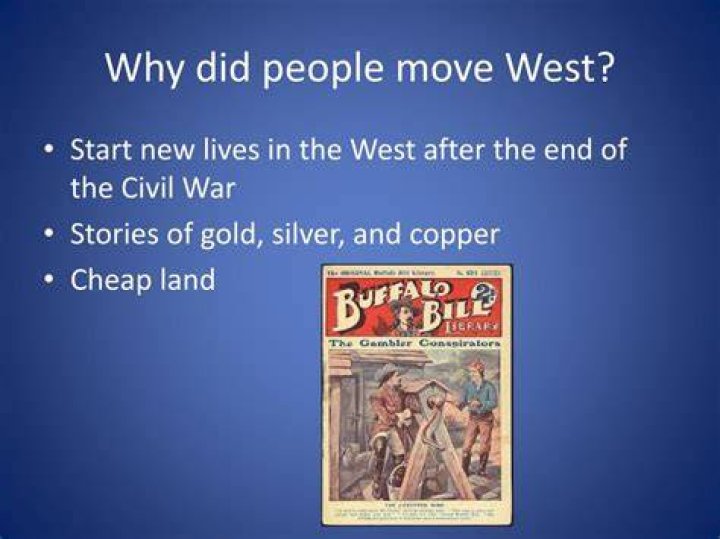
 Sophia Aguilar